The Long
Silence
CHAPTER #3
The Long Silence
Generations passed after the great migration, and the world of the Lil Hoots grew wide and quiet.
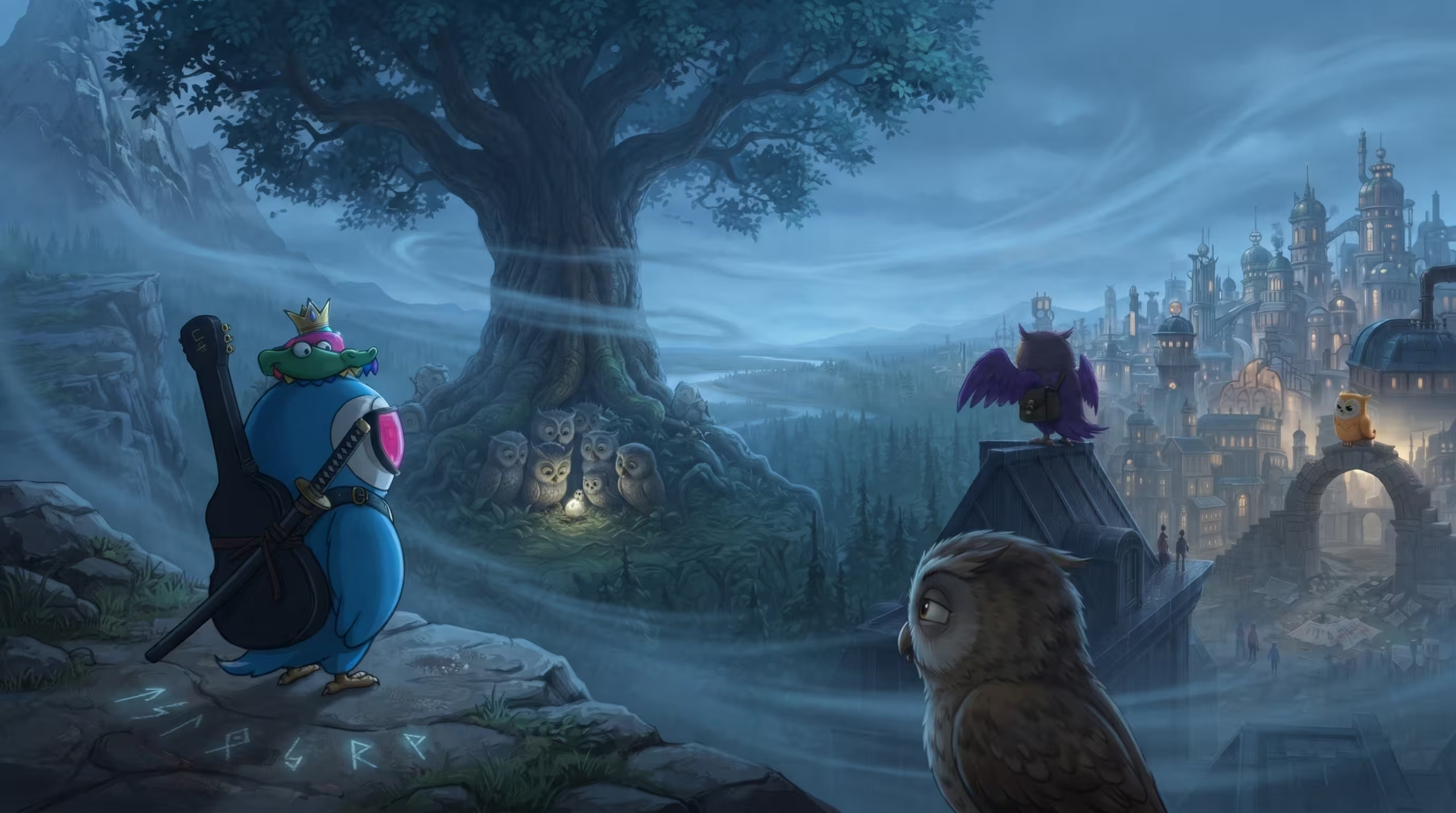
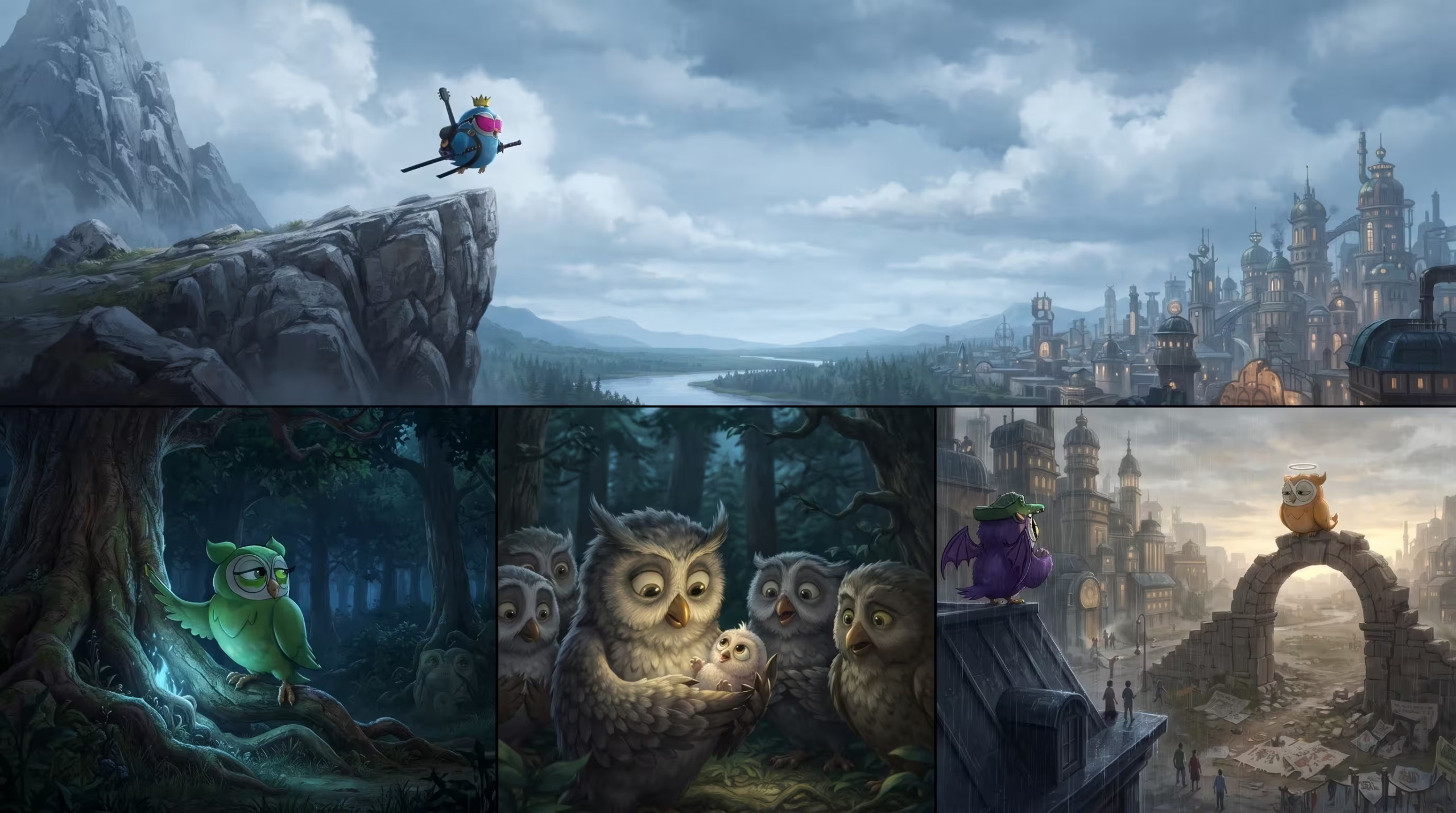
In the beginning, the lineages still remembered one another. The Bald Hoots carried words from the high cliffs down to the deep forest, and the Forest Hoots sent counsel back on the same wings. The Day Hoots opened every sunrise with a gathering so bright that travelers could see it from the plains. The City Hoots returned from the streets of men with strange stories, and the Night Hoots kept those stories in the dark, where fragile things are kept safe.
But distance is a slow kind of forgetting.
The journeys grew longer, and the visits grew rarer. A season passed without a messenger. Then a year. Then a generation of young Hoots grew up who had never seen a Hoot of another lineage, and who believed the old songs about their cousins were only songs.
Each lineage kept a piece of the beginning, and each piece, kept alone, began to change.
The Day Hoots still gathered at dawn, wings open to the first light. But the gathering had once been a promise renewed, a pact sung back to the sky. Now it was only a habit of beauty. They sang the words without remembering what the words had promised.
The Forest Hoots still kept the memory of the first trees, the roots where the fragments of starlight had slept. But no one came to ask them questions anymore. Their counsel, once sought by all, was now spoken to an empty canopy, and some of the youngest among them began to wonder why memory mattered, if no one came to hear it.
The City Hoots learned the streets so well that they could read the intentions of men in the closing of a door, the pause before a footstep. Yet the longer they watched others, the less they were seen, and the less they were seen, the less they returned to tell what they had learned. Knowledge gathered in silence stays in silence.